Chemical Etching (Photo Etching) Services at Hollinbrow:
Precision Manufacturing for Modern Industry
At Hollinbrow, we specialise in providing high-quality chemical etching services tailored to the needs of industries that demand precision, flexibility, and innovation. With decades of experience and a commitment to excellence, our chemical etching solutions enable the creation of complex metal components with unrivalled accuracy and repeatability.
What is Chemical Etching?
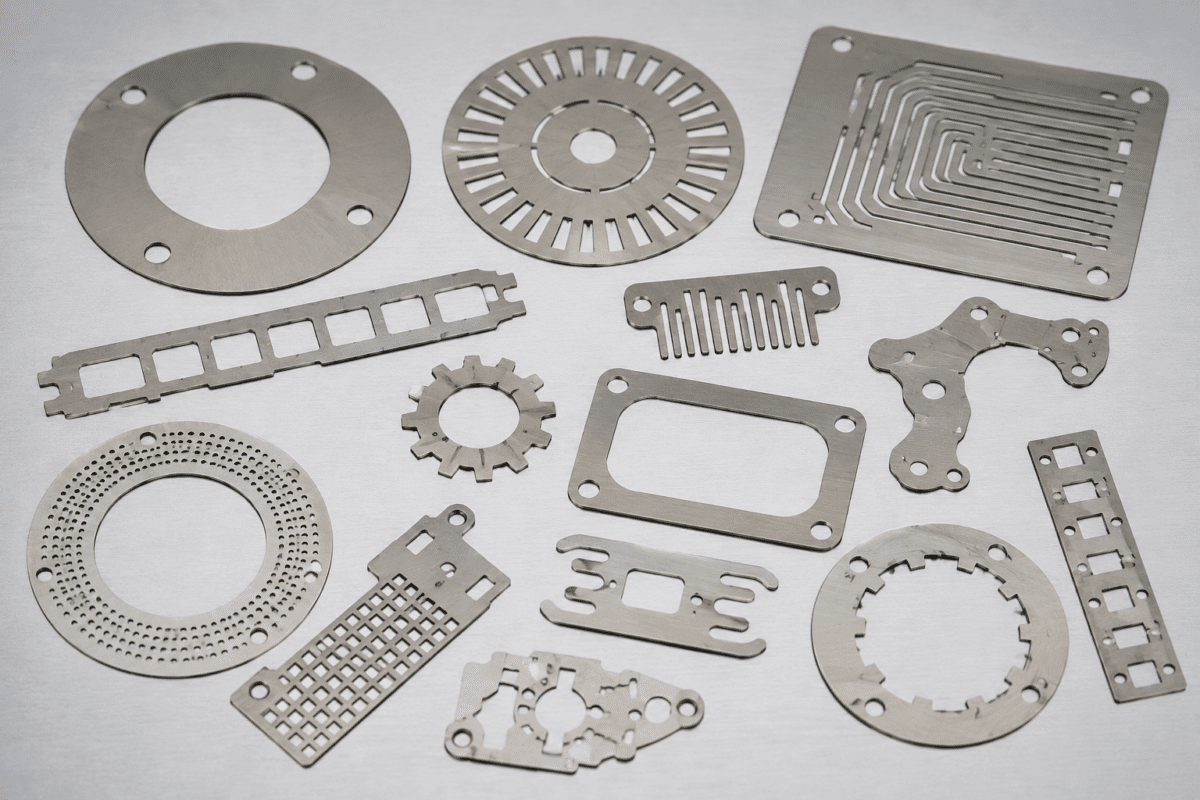
Chemical etching, also known as photo etching, is a subtractive manufacturing process that uses chemical solutions to selectively remove material from metal sheets. By applying a photoresist mask and exposing the metal to a carefully controlled etchant, we can create intricate patterns, fine details, and complex geometries that are often impossible or cost-prohibitive with traditional machining methods.
The Benefits of Chemical Etching
Chemical etching offers a range of advantages for product designers and engineers:
- Design Flexibility: The process enables the creation of highly complex and precise components without the need for expensive tooling or dies. Modifications can be made quickly and cost-effectively, making it ideal for prototyping and small to medium batch production.
- Burr-Free and Stress-Free Parts: Unlike stamping or laser cutting, etching does not create mechanical stresses or burrs, resulting in smooth edges and surfaces that require minimal finishing.
- Material Versatility: Our chemical etching process is compatible with a wide variety of metals, including stainless steel, copper, brass, nickel, and more. This versatility allows us to meet the needs of diverse industries, from electronics and automotive to aerospace and medical devices.
- Fast Turnaround: With rapid tooling and streamlined processing, we are able to deliver finished components quickly, helping you accelerate your product development cycles.
Our Chemical Etching Process
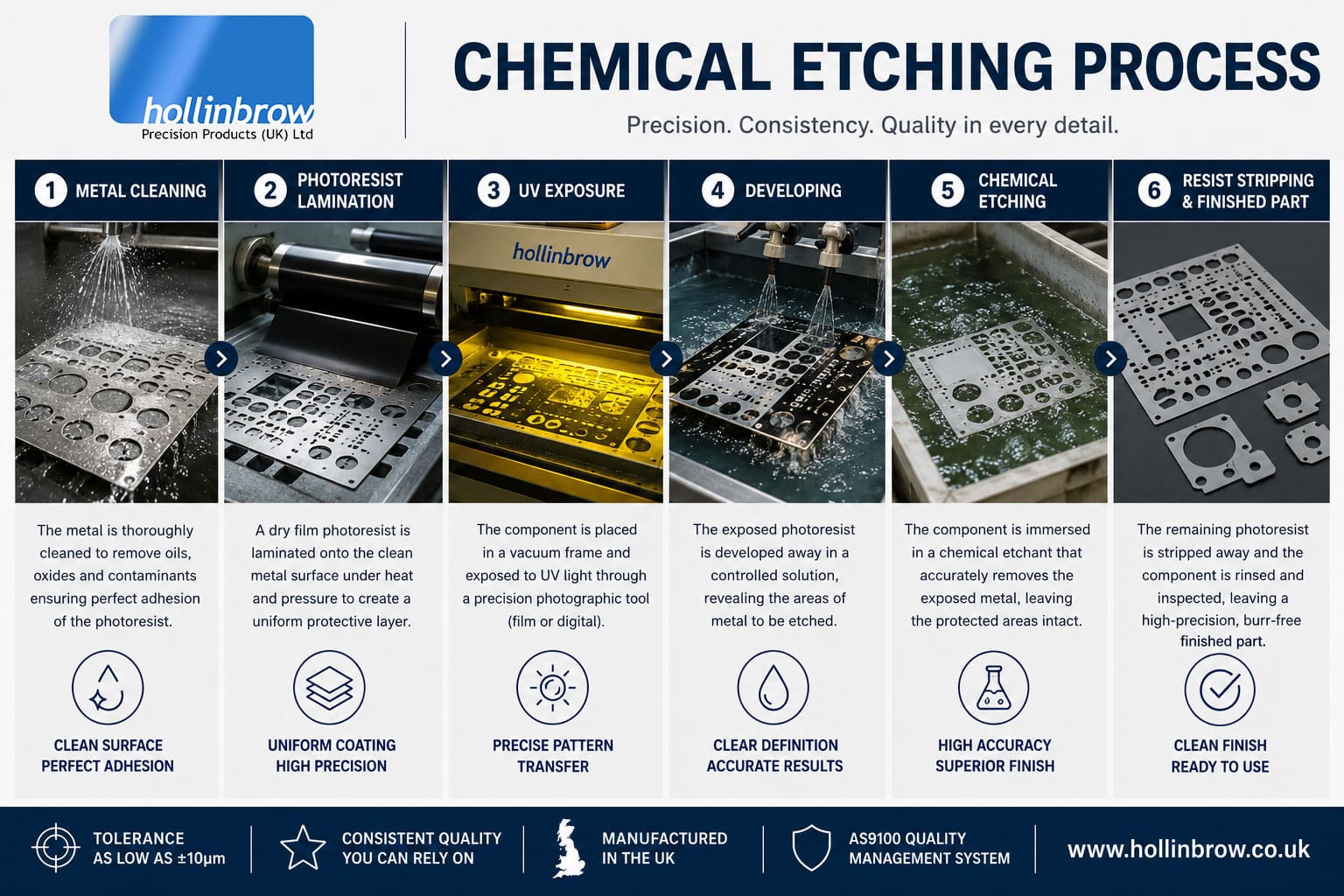
The process begins with your design, which is transferred onto a metal sheet using a high-resolution photomask. The sheet is then coated with a photoresist and exposed to UV light to harden the desired areas. After developing the image, the metal is immersed in a chemical bath that precisely removes the unprotected areas, leaving behind the finished component. Our state-of-the-art equipment ensures tight tolerances, consistent quality, and the ability to handle both simple and highly intricate designs.
Typical photo-etching process
- Material selection
- Stainless steel
- Copper / brass
- Nickel alloys
- Aluminium
- Other suitable sheet metals
- CAD drawing / artwork
- The required component is designed in CAD.
- Dimensions, holes, slots, tolerances, and etch depths are defined.
- The CAD geometry is converted into phototool artwork.
- Sheet preparation
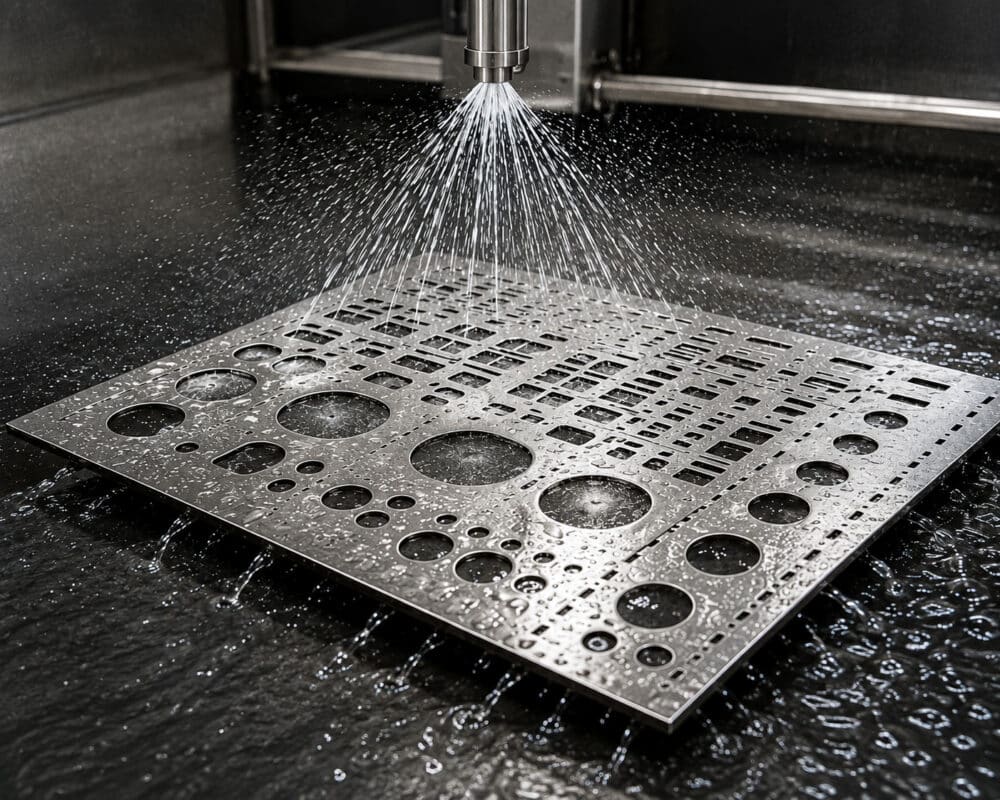
- Metal sheet is cleaned and degreased.
- The surface must be free from oil, oxide and contamination.
- Photoresist application
- A UV-sensitive photoresist is applied to one or both sides of the metal sheet.
- UV exposure
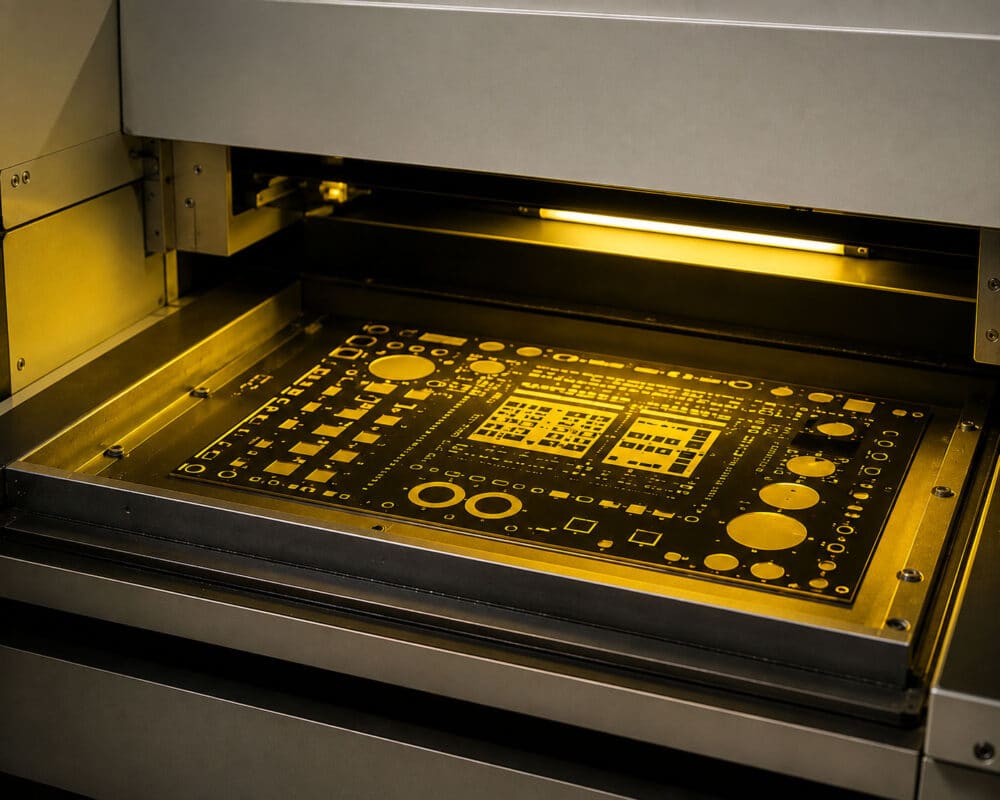
- The sheet is placed between photographic masks containing the component pattern.
- UV light exposes the required areas of the resist.
- Developing
- The exposed/unexposed resist is developed, depending on the resist system.
- This leaves the metal areas that need to be protected during etching covered by resist.
- Chemical etching
- The sheet passes through an etching solution.
- The exposed metal is chemically dissolved.
- Etching can be performed from one or both sides to produce through-holes or controlled-depth features.
- Resist stripping and cleaning
- Remaining photoresist is removed.
- The etched components are washed and inspected.
- Finishing and inspection
- Deburring/cleaning or additional plating/coating can be performed if required.
- Dimensions are checked against the CAD drawing.
Advantages
- No mechanical cutting forces
- Excellent for very small and intricate features
- No tooling charge for conventional hard tooling
- Suitable for rapid prototyping and production
- Multiple components can be produced simultaneously from one sheet
- Minimal mechanical stress and distortion
- Particularly useful for thin sheet metal
Important design considerations
Photo-etching isn’t simply a 2D cutting process: etch undercut occurs as the chemical attacks the metal laterally. Consequently, the achievable dimensional accuracy depends on material, thickness, etchant, feature size and process parameters.
If you tell me the metal/material, sheet thickness, component dimensions, required quantity, and whether you need through-etching or partial-depth etching, I can give you a suitable photo-chemical etching process specification, including the recommended resist, etching approach, tolerances and inspection requirements.
Applications of Chemical Etching
At Hollinbrow, we serve a wide range of industries and applications, including:
- EMI and RFI shielding
- Precision springs and washers
- Lead frames and connectors
- Meshes, screens, and filters
- Decorative metalwork
- Nameplates and labels
Why Choose Hollinbrow?
Our dedicated team works closely with clients from concept to completion, offering expert advice on design optimisation, material selection, and process efficiency. Every project benefits from our rigorous quality control and customer-focused approach.
Experience the advantages of chemical etching with Hollinbrow. Contact us today to discuss your project requirements and discover how our precision manufacturing solutions can elevate your products.